Best VPN for IPTV: Setup, Speed & Privacy Guide (2026)
A straight answer on whether you need a VPN for IPTV, which features actually matter for 4K streams, and how to set one up on Firestick, Android boxes, and your router.
- Stop ISP throttling from wrecking streams
- Firestick, Smart TV & router setup
- Server location tips for US viewers

The best VPN for IPTV is the one that keeps your streams fast, your connection stable, and your viewing habits between you and your provider — nothing more, nothing less. If you stream live TV over the internet in the US, your ISP can see the traffic and, in some cases, slow it down during peak hours. A quality VPN encrypts that traffic and routes it through a nearby server, which often smooths out throttling-related buffering. This guide covers what a VPN actually does for IPTV, which features matter for 4K, and exact setup steps for Firestick, Android boxes, Apple devices, and routers.
What a Good VPN Adds to Your Streaming Setup
A VPN is a privacy and stability tool, not a magic wand. Here is what it genuinely delivers for IPTV viewers.
Encrypted Traffic
AES-256 or ChaCha20 encryption wraps your streaming data so your ISP sees only an encrypted tunnel, keeping your viewing activity private on any home or public network.
Throttling Relief
When an ISP deprioritizes video traffic at 8 p.m., a VPN hides the traffic type. Many viewers see steadier bitrates during prime time once streams travel through an encrypted tunnel.
Stable Routing
VPN providers often maintain better peering routes than consumer ISPs. Connecting through a well-placed server can shorten the network path between you and a streaming source.
Safe Public Wi-Fi
Watching on hotel or airport Wi-Fi exposes your session to anyone on the network. A VPN secures IPTV logins and playlist URLs on shared connections you cannot control.
Kill Switch Protection
A kill switch cuts internet access the instant the VPN drops, so your real IP and traffic never leak mid-stream. Look for this feature on every device you use.
Whole-Home Coverage
Installed on a compatible router, one VPN subscription covers your Firestick, Smart TV, phones, and tablets simultaneously — including devices that cannot run VPN apps natively.
Set Up a VPN With Your IPTV Service in Four Steps
No technical skills needed. Pick a plan, receive your login credentials by email, and start watching on any device.
Pick a VPN with WireGuard support
Choose a reputable paid provider — ExpressVPN, NordVPN, Surfshark, and Proton VPN all publish independent no-logs audits. Free VPNs throttle bandwidth and often sell the very data you are trying to protect.
Install the app on your streaming device
Grab the VPN app from the Amazon Appstore on Firestick, Google Play on Android boxes, or the App Store on Apple TV (tvOS 17 and later supports native VPN apps).
Connect to a nearby US server
Pick a server in or near your own city or region. Shorter physical distance means lower latency, which matters more for live TV than raw download speed.
Activate your Watchit trial and stream
Request the 24-hour free trial on WhatsApp, load your login into IPTV Smarters Pro or TiviMate, and test a few live channels with the VPN on. You should see stable playback within seconds.
Why Watchit Works So Well Behind a VPN
Watchit runs anti-freeze servers built for encrypted connections, so streams stay smooth whether your VPN exit point is in Dallas or Denver. With 22,000+ live channels, 80,000+ movies and series, and 24/7 WhatsApp support, your privacy setup never comes at the cost of picture quality.
- Anti-freeze servers tuned for VPN-routed traffic
- 4K and FHD streams where available, even through encryption
- Works with every major VPN app on Firestick and Android
- 24-hour free trial to test your exact VPN configuration
- Plans from $25 for 3 months — PayPal, card, or crypto
- 24/7 WhatsApp support for connection troubleshooting
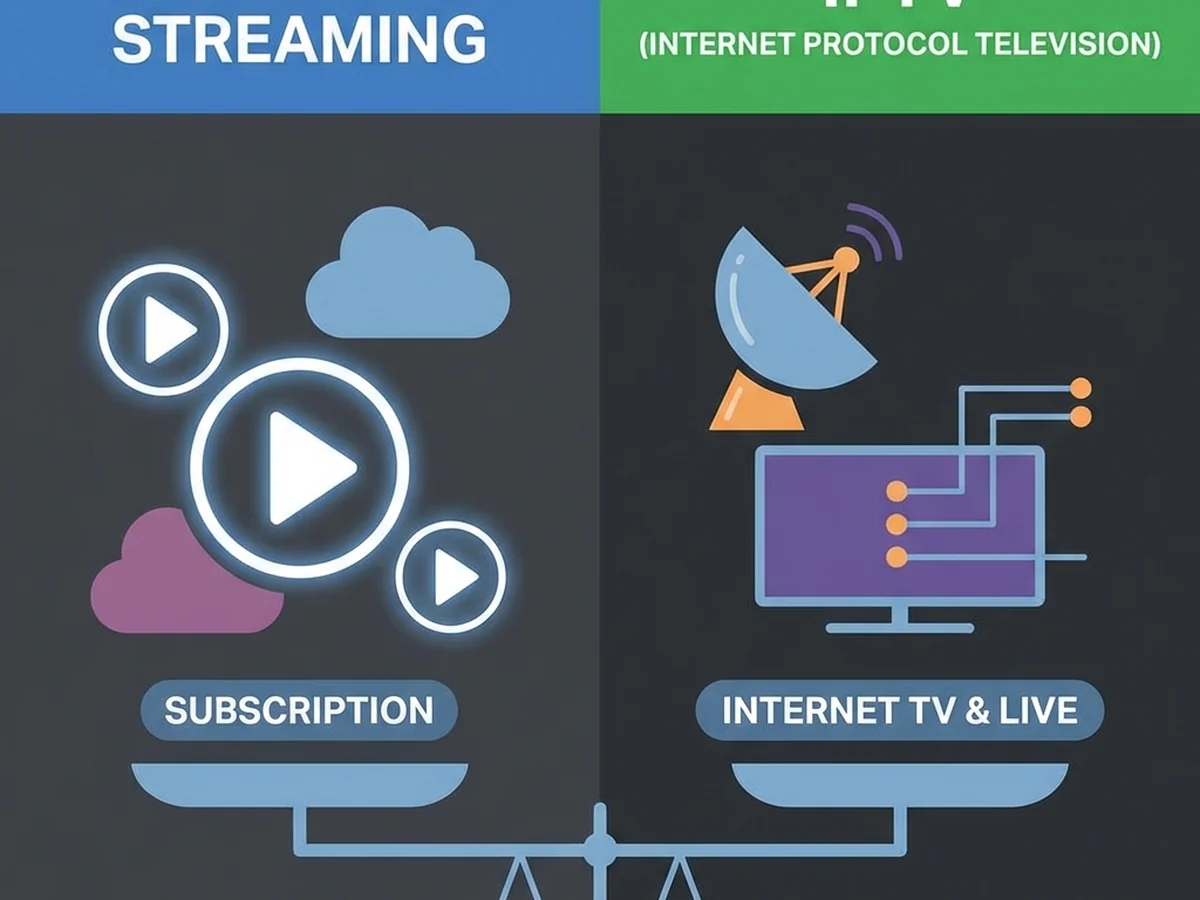
See How Smooth IPTV Runs Behind Your VPN
Watchit's anti-freeze servers hold steady bitrates through encrypted tunnels. Test your exact VPN setup with a full 24-hour trial.
VPN Protocols Compared for 4K IPTV Streaming
| Features | Feature | WireGuard | OpenVPN (UDP) | IKEv2/IPsec |
|---|---|---|---|---|
| Typical speed overhead | Lowest — modern lean codebase | Moderate — older, heavier design | Low — efficient on mobile | |
| Connection stability | Excellent, fast reconnects | Good, slower to re-establish | Excellent on changing networks | |
| Best for 4K live TV | Yes — first choice | Fallback when WireGuard is blocked | Solid choice on iPhone/iPad | |
| Device support | Firestick, Android, iOS, routers | Nearly universal, incl. old routers | Native on Apple devices | |
| Battery/CPU load | Very light | Heavier on low-power boxes | Light |
Choose Your IPTV Plan
Simple, transparent pricing. Every plan includes the full channel lineup, the VOD library, and 24/7 support. Cancel anytime.
3 Months
The easy way to try premium IPTV without a long commitment.
$45 Save 44%
Get 3 Months- 22,000+ live channels
- 80,000+ movies & series (VOD)
- Full HD and 4K where available
- Works on 1 device at a time
- Anti-freeze servers and EPG guide
- 24/7 support on WhatsApp
6 Months
The balanced pick if you watch TV every day.
$80 Save 44%
Get 6 Months- Everything in the 3-month plan
- Priority anti-buffering streams
- Premium channels in 4K and Full HD
- Works on 1 device at a time
- Free updates and catch-up TV
- Fast 24/7 support
12 Months
The lowest monthly price. Our most popular plan.
$140 Save 50%
Get 12 Months- Everything in the 6-month plan
- The lowest price per month
- 22,000+ channels in 4K/FHD
- Premium anti-freeze network
- Multi-device ready
- VIP priority 24/7 support
Still not sure? Start a free trial before you buy.
Do You Need a VPN for IPTV? An Honest Answer
Strictly speaking, no — IPTV works fine over a normal internet connection, and a VPN is never a legal requirement for streaming in the US. So why do so many viewers use one? Three practical reasons: privacy, throttling, and network stability. Your ISP can see that you stream heavy video traffic, and some providers manage that traffic aggressively during peak evening hours. A VPN removes their ability to classify what you watch.
What a VPN does not do is change the legal status of anything. Encryption is a privacy tool, and questions about which services operate lawfully deserve a real answer, which is why we wrote a plain-English breakdown of how US law treats IPTV services. Treat a VPN as insurance for smooth, private streaming — the same reason millions of Americans use one for banking and browsing.
What a VPN Does (and Does Not Do) for IPTV Users
A VPN does exactly three things: it encrypts your traffic, replaces your visible IP address with the server's, and routes your data through the provider's network. For IPTV, that translates into concrete benefits — your ISP cannot inspect or shape your streams by content type, your home IP stays out of third-party logs, and you sometimes get a cleaner route to the streaming source.
Here is what it will never do. A VPN cannot raise your ISP's base speed; a 100 Mbps line stays a 100 Mbps line, minus roughly 5-15% encryption overhead on a good protocol. It cannot fix a weak Wi-Fi signal between your router and Firestick. And it cannot make an unstable IPTV provider reliable. Pick a solid service first, then add the VPN layer.
How ISP Throttling Affects IPTV Streams — and How a VPN Helps
ISP throttling is traffic management: your provider identifies high-bandwidth video streams using deep packet inspection and deliberately slows them when the network is busy. The telltale pattern is streams that run flawlessly at 2 p.m. but stutter every evening between 7 and 11 p.m., while a speed test still shows full bandwidth — test traffic is rarely throttled.
A VPN defeats classification-based throttling because encrypted traffic all looks the same. Your ISP sees a single TLS-like tunnel to one server and cannot single out the video inside it. The effect is most noticeable on high-bitrate content: a 4K IPTV stream pulling 15-25 Mbps is a prime throttling target, so viewers on premium picture settings tend to see the biggest improvement. If your buffering is constant at all hours, though, the cause is more likely Wi-Fi or device-side — throttling has a schedule.
What to Look For in a VPN for IPTV: Speed, Servers, Policies
Four criteria separate a streaming-grade VPN from the rest. First, protocol support: WireGuard (or a provider's WireGuard-based variant like NordLynx) is the current speed benchmark and should be non-negotiable. Second, US server density — a provider with servers in 20+ American cities lets you connect close to home, keeping latency low for live TV.
Third, an audited no-logs policy. Marketing claims are cheap; independent audits by firms like Deloitte or Cure53 are not, and the major providers now publish them. Proton VPN, frequently searched alongside IPTV, is a fair example of a provider with a published audit history and solid WireGuard speeds. Fourth, device coverage: native apps for Fire TV and Android TV, plus router support for everything else. Skip free VPNs entirely — capped bandwidth and data resale make them the worst possible match for streaming through a trustworthy IPTV provider.
Top VPN Features Compared for 4K IPTV Streaming
The protocol comparison table above tells most of the story: WireGuard wins on raw throughput and reconnect speed, which is why every serious provider now leads with it. But protocols are only half the equation for 4K. Sustained 4K IPTV needs 25 Mbps of clean, consistent bandwidth, so the features around the protocol decide whether that bitrate actually holds.
Features that earn their place
- Split tunneling — route only your IPTV app through the VPN while game consoles and video calls take the direct path, preserving bandwidth on both sides.
- 10 Gbps server ports — providers upgrading their US fleet to 10 Gbps hardware handle prime-time load with fewer slowdowns.
- Auto-connect on boot — essential on a Firestick, where you want protection live before your player app opens.
- Simultaneous connections — five to unlimited device slots, so your TV box, phone, and tablet stay covered under one plan.
Setting Up a VPN for IPTV on Firestick
The Firestick is the most common IPTV device in America, and thankfully VPN setup takes about five minutes. From the home screen, open the Amazon Appstore, search for your VPN by name, and install the official app — ExpressVPN, NordVPN, Surfshark, and IPVanish all maintain native Fire TV apps with remote-friendly interfaces.
- Install your VPN from the Amazon Appstore and log in.
- In the VPN settings, switch the protocol to WireGuard and turn on the kill switch.
- Connect to the closest US city server and confirm the new IP.
- Open your IPTV player and start a live channel to verify smooth playback.
On the older Fire TV Stick Lite, encryption costs some CPU headroom, so stick to WireGuard — OpenVPN can push the little stick to its limits on 4K streams. For player choices and device tuning, see our full guide to running IPTV on Firestick.
VPN on Smart TVs, Android Boxes, and Apple Devices
Device support varies more than most guides admit. Android TV boxes — NVIDIA Shield, onn. 4K, Chromecast with Google TV — are the easy case: install any VPN straight from Google Play and it runs exactly like on a phone. Apple TV gained native VPN apps with tvOS 17, so a current Apple TV 4K can run ExpressVPN or NordVPN directly; older models cannot. On iPhone and iPad, IKEv2 or WireGuard both perform well for on-the-go viewing.
Samsung Tizen and LG webOS TVs are the awkward ones: their app stores carry IPTV players but no true VPN apps. Your options are a router-level VPN, sharing a VPN connection from a Windows laptop via hotspot, or a provider's SmartDNS feature — though SmartDNS changes routing only and encrypts nothing. Frankly, if you stream on a Smart TV without Android, plugging a $30 Fire TV Stick into it is usually simpler than any workaround.
Router-Level VPN: Protect Every Screen at Once
Installing a VPN on your router pushes every device in the house through the encrypted tunnel — including Smart TVs, game consoles, and IPTV boxes that cannot run VPN apps themselves. One login covers unlimited screens, and nobody has to remember to connect.
The hardware matters. Stock ISP routers rarely support VPN clients, so you need either a router running ASUSWRT (many ASUS models support WireGuard out of the box), firmware like OpenWrt or DD-WRT on compatible hardware, or a pre-configured unit from a vendor such as GL.iNet. Check the router's CPU: budget models max out around 20-50 Mbps of encrypted throughput, which strangles 4K, while a modern ARM-based router sustains 200+ Mbps over WireGuard.
One smart pattern for households running Watchit's Multi-Screen plan on three screens: put the VPN on the router, then create a separate non-VPN guest network for devices where latency matters more than privacy, like game consoles. Every IPTV screen stays encrypted; everything else stays fast.
Best VPN Server Location for IPTV in the USA
The best VPN server location for IPTV is almost always the one closest to your couch. Live TV is latency-sensitive: every extra thousand miles of routing adds delay and more network hops where packets can drop. A viewer in Atlanta should try Atlanta first, then Miami or Charlotte — never default to a Los Angeles server from the East Coast.
Two refinements improve on pure distance. First, prefer lightly loaded servers: most VPN apps show a load percentage, and a city server at 90% capacity will stream worse than one two states away at 30%. Second, if your closest city consistently buffers, test two or three alternatives and keep whichever holds a steady stream for a full half hour. Viewers streaming US IPTV channels from within the country rarely need to think beyond this; connecting to overseas servers just adds distance and cuts speed for zero benefit.
Troubleshooting: When IPTV Only Works With (or Without) a VPN
Both failure modes are common, and each points to a specific cause. If your IPTV only works with a VPN on, something between you and the service is interfering with the direct route — typically ISP traffic shaping, a DNS-level block on your ISP's resolver, or a bad peering path. The VPN fixes it by moving your traffic onto a different route with different DNS. Switching your device DNS to 1.1.1.1 or 8.8.8.8 sometimes resolves the DNS variant without a VPN.
If your IPTV only works with the VPN off, flip the diagnosis: your streaming source may rate-limit well-known VPN datacenter IP ranges, or the added latency of a distant server tips a marginal connection into timeout territory. Try a different city server, switch protocols from WireGuard to OpenVPN, or use split tunneling to route only your player app directly. Persistent trouble on Watchit specifically? Message support on WhatsApp — the team troubleshoots VPN configurations daily and answers around the clock.
VPN Speed Tips to Keep Buffering Away
A well-tuned VPN should cost you barely noticeable speed. When it costs more, work through these fixes in order — each one addresses a distinct bottleneck.
- Switch to WireGuard. If your app defaults to OpenVPN, changing protocol alone can dramatically improve throughput on the same server.
- Change servers, same city. Individual servers get congested; hopping to another node in the same location takes ten seconds.
- Use Ethernet where possible. A wired connection to your Android box removes Wi-Fi interference, the most common non-VPN cause of evening buffering.
- Lower the encryption workload on old hardware. A 2018-era Firestick decrypting 4K video runs hot; a newer Fire TV Stick 4K Max handles it easily.
- Test at the source. Run your stream with the VPN off for five minutes. If it buffers anyway, the VPN was never the problem.
The final variable is the IPTV service itself. Watchit's anti-freeze servers are engineered for consistent bitrates, so a clean VPN tunnel carries streams that were stable to begin with — grab a 24-hour free trial and benchmark your exact setup before committing.
Private Streaming Starts With the Right Service
A VPN protects the connection — Watchit supplies the 22,000+ channels and 80,000+ movies worth protecting. Plans start at $25 for 3 months.
Frequently Asked Questions
Everything you need to know before you subscribe. Still have questions? Our support team is available 24/7.
Related IPTV guides and plans
Pair Your VPN With Watchit: Start Your 24-Hour Free Trial
You have the privacy layer figured out — now add the streaming service built to run behind it. Message us on WhatsApp and you will be testing live channels through your VPN within minutes.